Showing posts with label asylum seekers. Show all posts

Sunday, 25 February 2018

Why I went to see Black Panther twice


*Beware:  spoilers*

I was really excited about seeing Black Panther, and when I did, last Monday, I loved it.

I loved the issues it addressed such as, "Should a wealthy country shut itself in to protect its way of life, or should it help others?" It touched my heart for very obvious reasons - after all, I work among refugees.

I felt encouraged to see so many positive, funny, smart, powerful (in the good sense of the term, not in the political sense) Black male AND female characters. I loved seeing those female warriors kicking ass!

I loved seeing what *could* have happened if African countries had been able to benefit from their own natural resources and build national wealth from it, rather than having it robbed from them by colonialists.

I felt moved by the villain's storyline and felt sympathetic to a lot of his grievances (even though I disagreed with his methods to try and put things to rights). He was a very human and relatable character, I thought. And when he said, "the world will be reborn, and this time, WE'll be on top", I felt deeply the pain of a people who have been oppressed, enslaved, exploited and discriminated against, not to mention having seen their resources plundered (including by my own country) - and yet I felt a pang as I thought, "As long as someone is on top, it means someone is at the bottom". And so what the villain wanted to create, no matter what his initial motivations were, was another injustice.

I loved how, when Jabari leader M'Baku is offered the chance to take the Black Panther's power by taking the Heart-Shaped Herb, he chooses to help T'Challa instead, when he could so easily grab power for himself.

And especially, I loved hearing the king of Wakanda's speech to the United Nations at the end:

Wakanda will no longer watch from the shadows. We can not. We must not. We will work to be an example of how we, as brothers and sisters on this earth, should treat each other. Now, more than ever, the illusions of division threaten our very existence. We all know the truth: more connects us than separates us. But in times of crisis the wise build bridges, while the foolish build barriers. We must find a way to look after one another, as if we were one single tribe.

So I decided to take African asylum seekers to see it as a treat.

And then the debate begun as one of my colleagues argued that only taking African people see it was unfair. Well, yes and no. We are organizing special activities on Women's Day, for example... and you could argue that's unfair. But the reason we do it it to do something nice for people who have been oppressed one way or another. I thought this movie was uplifting and positive for the African community. We ended up going with 14 African people of both sexes (from Guinea, Sudan, Burkina Faso, Rwanda, Angola, Senegal), one Iraqi guy and a young Albanian girl. They loved the film. They giggled when T'Challa freezes upon seeing his ex-girlfriend Nakia. They roared with laughter when Shuri points to T'Challa's sandals, asking, "What are those???" They loved it when Agent Ross tries some whitesplaining on M'Baku, the Jabari leader, who proceeds to silence him by barking at him, together with his guards. They even applauded when the movie ended.

On the way back, I was driving the van and I remained silent. I could have told them why I took them to see this film. I could have told them what I loved about it, what my favourite moments were. But I decided not to. Because it was their film, their moment. I wanted to give them ownership of it and not rob it from them by putting my white words and emotions on their experience.

So I listened to them chat excitedly about it, discussing which countries and tribes inspired the costumes. And then, one of the guys said, "That was good." His friend approved, "Yeah, that was good". And in that moment, I felt filled with joy, as when two other guys came up to me before going back to their rooms, saying, "Thank you for taking us. It was your idea, thank you."

#OneTribe


Friday, 10 March 2017

Islam - no way out?

Sometimes I hear a sentence that just startles me and makes me want to scream in frustration. Maybe that makes me a "snowflake", but there are things that I cannot let pass.

Recently, a Christian friend and I were discussing Islam and I explained someone I know was contemplating converting to Islam. I saw it as a positive, because the lady in question came from an atheist background and embarked on a spiritual search. My friend, however, did not see it quite in the same way.

"I wonder if she realises that once converted to Islam, she has no way out - all schools of sharia law prescribe either imprisonment or death for apostasy".

My initial reaction was to want to bang my head against the wall. There are so many things that are wrong with this statement I don't even know where to start...


First and foremost, we live in Belgium, where religious freedoms are protected by law: people may not only choose their religion, but change it if they wish. This means if my friend became a Muslim, she could change her mind afterwards. Moreover, if her Muslim friends are open-minded, they will respect her choice either way. I personally know a young girl who converted to Christiniaty from a Muslim background, and her family respected and supported her choice.

I love and respect the Muslims I've come to know. I feel blessed to count them as friends, and I get sad and angry when people tar them all with the same brush. When they ask me about my faith I always tell them I am a Christian. I have never felt any hostility from them, quite the opposite. They are some of the most respectful and hospitable people I have ever met. In addition, I have great respect for their piety. Who among us Christians prays 5 times a day, or fasts for 40 days, or learns significant portions of Scripture by heart? Their devotion is an inspiration. Of course, this doesn't mean I want to become a Muslim myself - I have explained before how and why I chose to follow Jesus.

"All schools of sharia law prescribe either imprisonment or death for apostasy" is a blanket statement that fails to consider the diversity that exists within Islam. True, some fringes of Islam want to impose sharia law throughout the world, which includes severe punishment for apostasy. But the key words here are "some fringes". Not all Muslims are Wahhabi - the fundamentalist, often violent branch of Islam who want to "spread purified Islam through the world, both Muslim and non-Muslim", only making up 0.5% of the global Muslim population (source: Wikipedia). There is a lot of diversity in Muslim doctrine (just like there are many branches of Christianity), from the most fundamentalist to the most progressive, and from decidedly violent to completely non-violent.

Finally, I think such talk about Islam goes against the teachings of Jesus. Equating the whole of Islam with violent fundamentalism is a narrative that, sadly, I have heard in some churches. In fact, I used to believe it… It presents Islam as a frightful threat, and Muslims as would-be invaders who want to take over the world, by violent means if necessary. As I’ve outline above, not only is it untrue, but it also has a perverse effect. It instils fears and therefore hostility within the hearts of Christians. How can we be effective witnesses of Christ if we feel fear and hostility towards a whole group of people? How can we love them as ourselves if we see them as dangerous enemies? Some Christians’ fear of Muslims is already turning to hatred, and politicians are using it to their advantage. Instead of welcoming the stranger as the Bible commands, many self-professing Christians openly reject them and even claim the need to protect ‘Christendom’ from the ‘Muslim invasion’, by force if necessary… while Christ teaches us that His Kingdom is not of this world anyway.

When confronted to a teaching in church, I try to look at the fruit that teaching produces. Does it bring love, peace, patience, kindness, goodness, faithfulness, gentleness? Or does it instil fear, hatred, selfishness, conflict and discord? Ask yourself this.


Wednesday, 17 August 2016

Why I am not a Muslim, and why I love Muslims regardless

There is a lot of negative talk about Muslims, and many people are hostile to Islam because of terrorism. I have written about this issue time and again. Indeed, I feel upset, sad and angry when people demonize all Muslims because of Daesh. The vast majority of Muslims are peaceful people who are appalled by terrorism and Daesh just as we are, and the majority of Daesh victims are actually Muslims. I also deplore the fact that whenever someone commits a crime and is of Muslim background, the media is quick to highlight it, whereas they seldom mention origin when someone from a "White, Christian" background is the culprit.

I have no personal issue with Muslims. I have Muslim colleagues and I work within a predominantly Muslim environment (a majority of the asylum seekers currently staying in our Red Cross centre identify as Muslims). I love working with them.

Lately, I had a conversation around faith with a Muslim friend. When I said I was a believer, he said to me, "If you were a true believer, wouldn't you accept the Word of the Prophet Mohammed, as he was foretold in the Bible?" 

This is interesting, because looking into Islam, ironically, played a part in my choosing the Christian faith:

"I met a Muslim. We discussed God and religion, and I read some booklets about Islam. As a result, some of my beliefs were challenged. Indeed, I had always thought that all religions all led to God. However, in Islam you had to obey lots of rules and do good deeds, and then maybe, if you were found good enough, God would accept you. On the other hand, I was being told in Church that as a sinner, there was nothing I could do to make myself acceptable to a perfect, absolutely good God, and that all I could do was accept what Jesus had done for me and commit my life to Him. That wasn’t the same thing at all – one belief system told me I had to work hard to deserve God’s acceptance, and the other told me there was nothing I could do and nothing I needed to do, because God had already done it all for me… all I had to do was receive His gift.


I was extremely confused. I could see both beliefs couldn’t be true at the same time, because in all logic they were self-excluding. But I had no idea which one was right. Both seemed to make sense. I knew I had to choose one or the other, and I did want to please God and do what He required, but I simply didn’t know which way was the right one.


I was more attracted to Islam because it fitted my views about God and religion: God wanted us to obey a certain set of rules and be good, and when we'd die He would weigh our good and bad deeds on a pair of scales and see which way it tipped. But I could not dismiss Christianity, because it could make sense too."

I am not going to get into why I don't believe the Bible foretold Mohammed; many Christian theologians have done it much better than I could. I am just going to explain why, personally, I cannot embrace the Muslim faith: because of Jesus. 


Muslim doctrine denies core elements of my faith. It denies the divinity of Jesus, while believing he really was God incarnate is crucial to my faith: God to me is not abstract and aloof, he is close to us. He got his hands dirty. He shared in the messiness of humanity. He knows our struggles because he's lived through them. I would go as far as to say that God LEARNT from the incarnation: instead of an "academic" knowledge of the human experience, he knows because he experienced it personally, which makes him able to fully empathize with us. As far as I know, this is absent from Islam. Second, Muslim doctrine denies Jesus's death. To them Jesus never died: God subsituted him for someone else and gave that other someone the appearance of Jesus. First, why the trickery? Why would God deceive us? Second, Jesus' death and resurrection is crucial to my faith. They bring me redemption and hope. Whatever your theory of atonement is, Jesus had to die, if only to fully identify with us in our humanity. His death reconciled us with God - he took our sins upon himself so we could be free of that burden, freed to do good instead. And if he didn't die, neither did he rise - and then where is the hope of our own resurrection? Jesus's incarnation, life, death and resurrection bring me a hope and peace that I have not found in Islam (I have read Muslim booklets explaining the faith, booklets designed to win over converts, as well as several passages from translations of the Holy Quran). This is why I am not a Muslim.

This being said, I have no personal problems with Muslim people. They are my human brothers and sisters, created by God and loved by God. He knows their hearts and I do not, so I cannot presume to know whether they are "saved" or not (whatever that means). I can only follow Jesus' command to love them. I work among Muslims every day at the center for asylum seekers. They are humans. They can be kind, loving, funny, rude, angry, hospitable, touching, humble, proud, they can be peaceful and they can be violent. They are human brothers and sisters, not better than us and not worse, either.

Finally, I think as Christians, we can learn from the devotion to God we see in Islam. Who among us prays 5 times a day? I know I don't. Who fasts from sunrise till sunset for 40 days? I know I don't. Who learns verses of the Holy Scripture by heart in order to be closer to God? I know I don't. So I have a lot of respect for my Muslim brothers and sisters.


Monday, 2 May 2016

The Bible, homosexuality, and abomination

Last summer, I described how my beliefs about homosexuality had changed over time.
In Biblical times, the main purpose of couples was to produce offspring to ensure the continuity of the family line and the perennity of the group. If any people felt love and attraction towards the same sex, they probably weren't encouraged to form a lasting bond, as it would have been of little social use. Much more visible, however, would have been the sexual abuse of young boys - and therefore, it would have been vigorously condemned by anyone with a strong sense of morality. So, if Bible authors were familiar with abusive homosexual behaviour, but not with committed, faithful same-sex relationships, they would have called it wrong and immoral. This notion has been brought forward before by scholars and Christian LGBT advocates, and they've argued the case much more convincingly than I can. But recently, something unexpected came to support this theory for me.
I never thought that working in a centre for asylum seekers would help me better grasp the issue of homosexuality, and why it seems, on the surface, to be so adamantly condemned in Scripture. Yet, meeting people from different cultures throws a very interesting light on the morality of this issue.

In our center, we have been holding discussion panels about life in Belgium, and mentioning things such as gender equality, freedom of religion, and LGBT rights. The question of gay marriage got a variety of responses. Many people, including those coming from a Muslim background, were very matter-of-fact about it, saying that we all need to respect the life choices of other people. Some people from Africa got their Bibles out and emphatically argued that homosexuality was inherently sinful. 
But what I found particularly interesting was this: many of our residents from Afghanistan or Iraq, when confronted to Western acceptance of homosexuality, state dryly that there is no such thing in their country. Some Afghans even protested, "Pedophilia is illegal where we come from!". Aghast that they would make such a comparison, I dug further. They explained to me that in Afghanistan, there is no such thing as two men loving each other the way a man and his wife do (or at least, they're not aware of it). What they have often witnessed, however, is the abuse of young boys by older men, not only back home, but also during their journey to Europe. Hence the way they recoil from the very mention of homosexuality, and the way they were quick to state that such things were illegal. Of course, we explained to them that pedophilia is illegal (and immoral) in Europe too, and that being attracted to someone of the same sex is totally different from child abuse. But I find their comments and reactions very enlightening. If the only type of homosexual relationship you'd ever witnessed was one of abuse and control, driven by lust and the desire to overpower the other person, rather than committed, loving relationships, you'd find the practice despicable, no doubt. You would be very likely to call it... an abomination. Wouldn't you?

Friday, 25 March 2016

Let us fight terrorism

22 March 2016. I was having breakfast when I heard the news. Terrorists had struck Brussels.

I felt immense grief. My heart went out to victims and their families. I have no idea how such pain and terror must feel.

All the same, I remember that this pain and terror is part of daily life for millions of human beings in Syria, Iraq, Afghanistan or Yemen. My heart grieves for those suffering every day all around the world.

And I feel overwhelmed by the same fear and grief than after the Paris attacks: fear for Muslims, as Daesh tries to create a rift between them and the rest of the Western population.  

Just as I did in November, I refuse to be consumed by fear, hostility and hate, and more than ever, I stand by my decision to love my Muslim brothers and sisters and to pray for my enemies

I choose love. I choose to fight terrorism in my own way. Would you join me? 

Terrorism, by its very definition, aims to terrorize us, and, in the more specific case of Daesh, to drive us apart from each other through fear, hostility, hate and rejection. If we're scared, the terrorists have won. And if we are overcome by fear and hatred for those who are Muslims, for refugees and strangers, they have won, too. So here is my plan to fight terrorists:

1. Let's not give into fear. Let's not allow them ruin our lives. We will all die, my friends, but, contrary to people in the Middle East, we are very unlikely to die in a terrorist attack. So let's not be afraid to go out, travel, go to big cities such as Brussels, Paris or London. Let's carry on with our lives and enjoy our freedom.

2. Let's not give in to hatred. Let's reach out to the other, the stranger. Let's welcome everyone without prejudice, whatever their nationality, ethnicity, religion; whether they have been living among us for decades or whether they have just arrived as immigrants.

3. Let's build relationships. If we have friends who are from another culture (even - gasp! - Muslims), let's spend time with them, deepen our friendship. Let's ask them about their culture, their passions, their values. We live in a multicultural society: they are among us. They're our neighbours, our colleagues, our local shopkeepers. They sit next to us on public transport. So if we don't know them, let's get to know them! Let's say hello; let's invite them for coffee, for a meal or for a movie.

 
4. Let's get informed. Let's not believe everything we see in the media (especially social media). Let's check information - check sources. Let's read serious articles and books about issues that concern us. Let's talk to people who are insiders and know their stuff: ask Muslims about their faith. If we want to know about refugees, let's ask the refugees and people who work with them (ask me about my work! I love to talk about it. What would you like to know?).

 
5. Let's celebrate diversity - the human race is made up of so many beautifully different people!


6. If we are believers, let's pray. Let's pray for peace, for love, and for unity; let's pray for compassion and mutual understanding. Let's pray for God's Kingdom to come - the Kingdom of reconciliation that Jesus came to bring.


I love this picture of my two friends, Lexi and Sara, because to me it represents friendship beyond our differences. My hope and prayer is that events such as the Paris and Brussels attacks will bring people together, not drive them apart.

Friday, 19 February 2016

Fleeing war

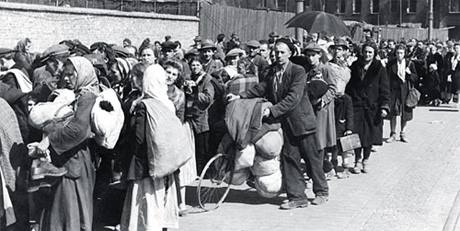
I was 13 when the army invaded. Those who were around the last time it happened had told us about the atrocities they committed, and we were really scared. So, along with many others, my family and I packed a few belongings and fled.

My mother took our little dog along and he became our air strike warning. He would hear - or feel, I'm not sure - the planes before we did, so whenever he started whining, we took cover, often in ditches. My mother would cover us with a big red blanket. I don't know what kind of protection she thought that was! The noise from the planes was terrifying, the bombs were even more so.

We crossed the border, but we were not welcome. Villages had signs saying there was no water for us. We were exhausted. We had to sleep in ditches.

At one point we met another family who came from the same village as we did. One of the boys, who would become my husband once we grew up, wrote me a card. I still have it. But we lost each other again  that time and only saw each other again when we came back to our village.

I understand those people fleeing war. We did the same thing.

- my grandmother

When the German army invaded Belgium in 1940, 2 millions Belgians, Dutch and Luxemburgers fled and became refugees in France.


Thursday, 10 December 2015

What is it like to work in a centre for asylum seekers?

So what is it like to work at a Red Cross centre for asylum seekers? Well, it is many things.

It's challenging. 

We house about 500 people from over 10 different nationalities, with a broad range of culture, education and background. Most are Muslims, some are Christians, a few are atheists. Some come from big cities, others from remote villages. We have single men, families (up to 10 children), single women, couples (including a few gay couples) and a few unaccompanied minors (teenagers). There's bound to be tensions and disagreements, and if you don't manage to calm things down and find a compromise everybody agrees on, you may very well have a fight on your hands. 

Because let's face it: this is a human population like any other. Some people are hard-working and offer to help out straight away, others are lazy. Some are kind and meek, others are angry and aggressive. They all have qualities and faults like the rest of us. Being asylum seekers doesn't make them angels (and equally, it doesn't make them demons either!). And all of them are under a huge amount of anxiety and stress, having gone through a rough journey (not to speak about the horrors of war and persecution), being housed in far-from-ideal conditions in a strange country, and living in complete uncertainty about their own future, as they don't know whether and when their asylum request will be granted.

Moreover, the centre is actually an old, de-commissioned hospital. Not only was it not in very good conditions to begin with, but it was never designed to accomodate 500 people. We get daily complaints about leaks, heating or water failures, or broken electrics. To top it all, we are in an rural area. The nearest village is 30 minutes away on foot, and the nearest town is 30 minutes away by bus (and busses don't run at the weekend). Residents feel isolated.

Then there is the language barrier. The majority of them only speak very, very basic English (or none at all), so communication can be a huge issue. When a mother comes to you in a panic, speaking quickly in Farsi while holding her child, and there is no one near who could translate what she is so urgently trying to tell you, it's intensely frustrating and stressful, because you know she needs you, but you can't help her until you've found someone who speaks Farsi AND English.

It's chaotic.

The centre only opened on October 1st, and a lot of repairs and refurbishment had to be done. We've had days when we knew a coach of 50 people would arrive an hour later, and workmen were still putting in showers and kitchens in the block where we were supposed to house them. The beds that were initially ordered turned out to be a disaster, as most of them broke, and we had to order new ones. Some rooms don't have a lock yet, resulting in children pillaging a room where we had stocked donated toys - I wanted to cry when I saw the state of the room afterwards. Fortunately, parents came to help us tidy up. In any case, we're often running around like headless chickens because there is so much to do.

It's heartbreaking. 

One man broke down in tears in front of me after being transferred to our centre. After enduring a dangerous journey, he had been temporarily housed in a camp under tents and had started making himself useful and getting to know people around him, only to be suddendly transferred here where he knew no one and felt useless. It was the last straw for him, and he cried and cried. Another man has no contact with his family at all - they live in Taliban country and he has no idea whether they're alive or dead. Yet another one, aged 24, lost his young son in an explosion.

It's wonderful.

You get to meet people from all walks of life and get a glimpse of their culture. If you're in the hallways at meal times, more often than not you're invited to share food with them. And then, they tell you their stories. They're doctors, engineers, barbers, singers, pilots, plumbers, therapists, artists. Theirs are human stories of joy and pain and loss and hope. A Muslim lady and her husband took a young lesbian couple under their wings - the girls now call them "Mama" and "Papa". Yesterday, a father and his daughter were reunited with his wife and 2 other children - they had been separated during the journey and we helped them trace each other. Seeing a 3-year-old girl scream, "Mama!", run down the corridor and throw herself around her mother's neck, then lifting up her 18-months-old brother and hugging him tight, is priceless.

It's joyful. 

I attended a "mutlicultural party" in another centre nearby. Afghan, Iraqi and Somali people showed us some traditional dancing, culminating in a big round dance where they grabbed by mother, my partner and myself, so we found ourselves in the middle of the dance floor. We're having such a party in our centre tomorrow night and I can't wait!

It's never dull, as we never know what might happen and there's always a funny anecdote waiting to be told. Yesterday, a resident came to me at 6:30 pm asking to see his social worker. I straighfacedly informed him that she had gone home, and that contrary to what it may seem at times, we do not sleep on the premises (we both burst out laughing at that point).

As a Christian, it is a true blessing.

I have a unique opportunity to serve people, and thus, to serve Jesus. When many hostile voices are rising against Muslims and refugees, I can show them love in a practical way (which, in terms of sharing the Gospel, speaks louder than any sermon). I am getting used to seeing different faces and this helps me overcome the fear we naturally feel when confronted to "the stranger". I am daily humbled by people's stories, and by my own lack of patience. I am learning daily to see people as Jesus sees them - beloved children of God. And trust me, that doesn't come easy when the same person comes for the same minor complaint for the third time while you're trying to deal with a sick child, or you have to face an angry, shouting man. It's a blessing, and it's humbling.

I love my job. Truly.

Friday, 4 December 2015

The need to be touched

Last week, I wrote a post about the need to be touched. Today I'd like to share a conversation I've had with one of the Red Cross volunteers who help out at our asylum seekers centre.

This lady is a trained reflexology therapist. She comes twice a week to give free foot reflexology massages to residents. Many of them have had to walk long distances, often with unsuitable shoes; and their feet are in a sore state (no pun intended). Add to that the stress of war trauma and of a perilous journey, the uncertainty about their own future, and the feeling of loss of control over their own lives. Our residents are under a lot of stress, and reflexology can really help. I am incredibly grateful to this lady for giving her time and skills for them. From two anecdotes she recounted, they are grateful too.

Those who come and see her often open up about what they've been through, as the treatment allows them to finally relax. At the end of the session, one of them took her hands in his and thanked her, saying, "You remind me of my mother. I miss her so much!" With that, he burst into tears and ran out of the room.

At the end of his treatment, another one said to her, "Now you sit down, madam." He then gave her a back massage. Turns out he was a trained massage therapist back home.

I think these stories speak from themselves about the importance of touch.


Friday, 13 November 2015

"We cannot take in all the misery of the world!"

You may or may not know that since 1 October 2015, I have been working in a Red Cross centre for asylum seekers. This is a job that suits my values and beliefs, and I view it as a great and challenging opportunity to serve God and others, as a Christian.

However, when I mention my work, there is a little sentence that I hear far too often and that really gets on my nerves.
 
"We cannot take in all the misery of the world!"

Nobody is asking us to take in all the misery of the world. According to recent statistics, 27,000 people registered as asylum seekers in Belgium. This is hardly "all the misery in the world" - not even close. If all conflict and poverty victims really came to Europe, we'd have billions to cope with, not thousands.

Which brings me to my second point. We may be facing an economic crisis, but we are still part of a privileged minority. None of us have to wonder where our next meal will come from, or where we will sleep tonight. We don't have to fear bombing, beheading, or persecution because of our ideas, faith or lifestyle. We enjoy huge amounts of freedom, and we have more than we need. Moreover, the only reason we have that privilege is that we were born in the right place. We did nothing to deserve it. So how dare we reject those who are less fortunate in that respect?

Not all people currently seeking asylum in Belgium will stay. Some decide to go back home when they realise what appalling conditions they'll have to live in for an undetermined period of time (have you ever visited a refugee camp?) Others won't get refugee status - criteria are strict and the procedure itself is complex. Others still will only be granted a subsidiary protection that's limited in time - if the situation in their country gets better, they will be asked to leave Europe.

Some, however, will stay. They will be workers and consumers, enabling our economy to keep going. They will bring their skills (many residents in my centre are engineers). They will be our neighbours, our doctors, or our shopkeepers. I hope they will be our friends, but that all depends on how we welcome them. If we treat them with wariness and hostility, how can they become integrated in our society?

During World War 2, many Belgians fled the country for fear of the Germans. My grandmother recalls that many French citizens regarded Belgian refugees with hostility, with some villages putting up signs that said, "No water for Belgians". How short our memory is!

Finally, if we don't welcome them, what should we do? Should we let them die on our doorstep? They're human beings. They're all somebody's son or daughter. They're fathers, mothers, brothers, sisters. Would you let your mother or your brother die on your doorstep because you worry there might not be enough room inside for them?

If you have a better solution, a human and compassionate alternative, we are all ears.